Waiting for lab results is one of the most stressful parts of managing your health. You leave your doctor’s appointment with a lab order, drive to a separate facility, wait in another line, give your blood, and then go home to wonder. Days pass. Sometimes a week. You check your patient portal repeatedly, unsure whether no news is good news or whether something was simply missed in the shuffle. For patients managing chronic conditions like diabetes, high blood pressure, or thyroid disorders, that waiting period is not just inconvenient — it actively delays care. Decisions about adjusting medications, changing treatment plans, or catching a developing problem early all depend on having timely, accurate information. When lab results arrive three to five days later, the window for the most effective response has often already narrowed.
The fragmented experience of modern healthcare — where your doctor is in one location, the lab is in another, and the results may be routed through multiple systems before reaching the right person — creates real gaps in the quality and speed of care patients receive. Many people assume this is simply how healthcare works. It does not have to be. In-house laboratory testing, performed and analyzed right inside your physician’s clinic, eliminates most of the friction that slows down diagnosis and treatment. When your blood is drawn, processed, and reviewed in the same visit, clinical decisions happen in real time — not after a multi-day delay that leaves you anxious and waiting.
At Express Internal Medicine in Plano, TX, Dr. Iram Qureshi offers in-house lab testing as part of a comprehensive, patient-first approach to primary care. Our goal is to give you answers during your visit — not days later — so that treatment can begin immediately, follow-up can be coordinated on the spot, and you leave with clarity rather than questions. From routine annual bloodwork to targeted chronic disease monitoring, our in-clinic lab services are designed to make your care faster, more accurate, and more connected.
What Is In-House Lab Testing?
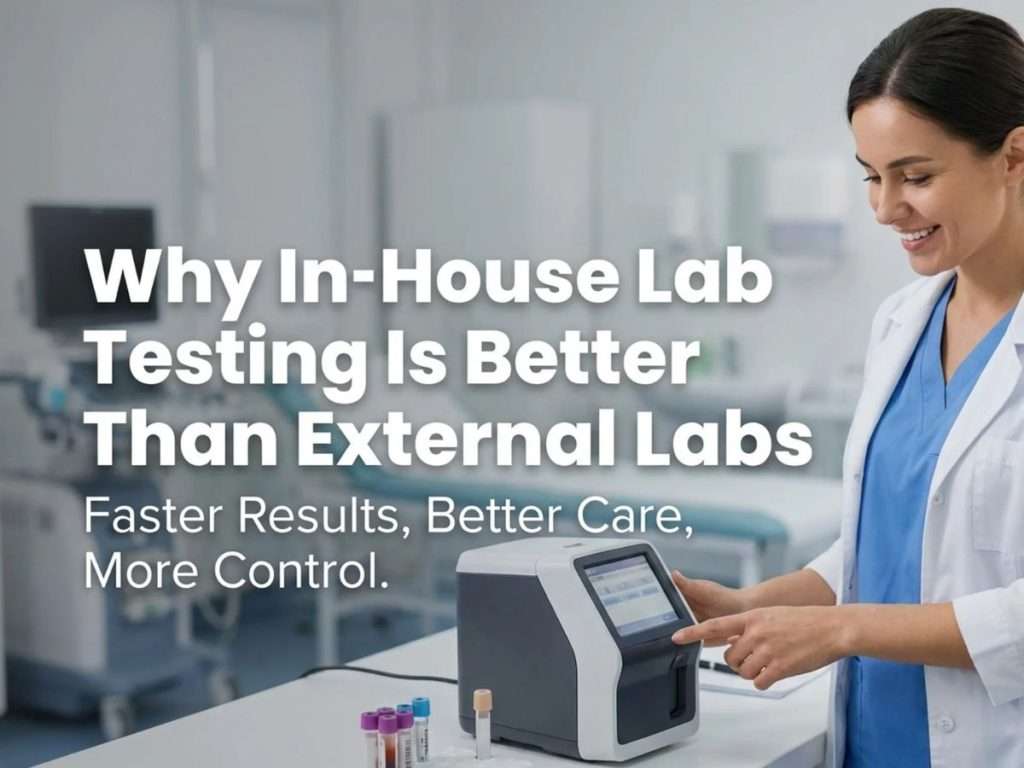
In-house lab testing refers to diagnostic blood, urine, and other laboratory tests that are collected, processed, and analyzed within the physician’s own clinic rather than being sent to an external commercial laboratory. The equipment, personnel, and analytical processes are all located on-site, meaning results are available within minutes to hours rather than days.
Common tests performed in-house at primary care clinics include complete blood counts (CBC), comprehensive metabolic panels (CMP), lipid panels, hemoglobin A1c for diabetes monitoring, thyroid function tests, urinalysis, rapid strep and influenza tests, COVID-19 testing, and point-of-care glucose measurements. These are among the most frequently ordered tests in primary care — and having them available in the clinic rather than outsourced to a reference laboratory changes the entire clinical encounter.
The contrast with external lab testing is significant. When a physician orders a test through an external laboratory, the patient must travel to a separate collection site, the specimen is transported to a processing facility, the analysis is performed remotely, results are transmitted back through electronic health record systems, and the physician must then review and communicate findings through a follow-up call or portal message. Each step in that chain introduces delay, potential for error, and a gap between when the information is gathered and when it can actually be acted upon.
The Key Benefits of In-House Lab Testing
Faster Results Mean Faster Treatment
The most immediate and obvious advantage of in-house lab testing is speed. Results that would take three to five days through an external lab are available within the same appointment or within a few hours of your visit when testing is performed in-clinic.
This speed is not merely a convenience — it is a clinical advantage. A patient presenting with concerning symptoms who receives same-visit lab results can be evaluated and triaged far more effectively than one who must wait days before a treatment decision is made. A patient with uncontrolled blood sugar who has their hemoglobin A1c checked in the office can have their insulin or medication adjusted that same day. Same-day lab results mean same-day answers, and same-day answers mean same-day care.
No Third-Party Delays or Specimen Handling Errors
Every step between blood draw and result is a potential point of failure. External lab testing involves specimen transport — during which samples can be improperly stored, exposed to temperature extremes, or mislabeled in transit. They pass through multiple handling steps at the reference lab before analysis, and electronic transmission of results introduces additional opportunities for routing errors or missing result notifications.
In-house testing eliminates the majority of this chain. The specimen goes from the patient directly to the in-clinic analyzer, handled by the same team that drew it, reviewed by the physician who ordered it. Fewer handoffs mean fewer errors, and the integrity of the specimen is maintained under consistent, controlled conditions throughout the entire process.
Everything Happens in One Visit
Fragmentation is one of the biggest quality problems in American healthcare. When diagnosis and treatment require multiple separate appointments at multiple separate facilities, patients fall through the cracks — particularly those who have difficulty taking time off work, arranging transportation, or managing complex schedules alongside a chronic health condition.
In-house lab testing makes it possible to complete your entire clinical encounter — symptom evaluation, physical examination, diagnostic testing, result review, and treatment planning — in a single appointment. This model of care is especially valuable for patients who book same-day doctor appointments for urgent concerns that need to be evaluated and addressed without sending the patient home with unanswered questions pending a multi-day external lab turnaround.
Better Chronic Disease Management
For patients managing ongoing conditions, lab testing is not a one-time event — it is a regular, recurring part of care. Hemoglobin A1c needs to be checked every three months for patients with uncontrolled diabetes. Lipid panels, kidney function tests, and liver enzymes need periodic monitoring for patients on certain medications. Thyroid levels need consistent tracking for patients on thyroid hormone replacement.
When these tests are done in-house, your physician reviews results in real time during your visit, compares them against your previous values, and adjusts your treatment plan immediately rather than calling you back days later. For patients receiving diabetes care and management, in-house A1c and glucose testing at every visit creates a tighter feedback loop between lifestyle changes, medication adjustments, and measurable outcomes — which translates directly into better long-term blood sugar control and fewer complications over time.
Improved Accuracy Through Consistent Standards
In-house lab equipment at quality primary care practices is calibrated and maintained to rigorous standards. Because the same equipment is used repeatedly by trained staff who follow consistent protocols, results are highly reproducible and directly comparable across visits. Your physician also develops familiarity with how the in-clinic equipment performs and can interpret results in the context of the specific analyzer being used — a nuance that matters when trends in values over time carry clinical significance.
Stronger Patient-Physician Communication
When test results are available during your appointment, your physician can walk you through what they mean in person — answering your questions immediately, explaining what the numbers indicate about your health, and discussing next steps while you are together. This is categorically different from receiving a portal notification three days later with a value and a brief comment, left to search the internet for context about what it means.
Real-time result communication reduces patient anxiety, improves understanding of health conditions, and strengthens the therapeutic relationship. Patients who receive in-person explanations of their lab results consistently report higher satisfaction and better recall of what they were told — both of which contribute to better adherence to treatment recommendations and long-term health outcomes.
What Tests Can Be Done In-House?
A well-equipped primary care clinic can perform a broad range of diagnostic tests without any external lab involvement.
Complete Blood Count (CBC): Evaluates red blood cells, white blood cells, and platelets — used to detect anemia, infection, immune conditions, and blood disorders. This is one of the most commonly ordered panels in primary care and benefits enormously from same-visit turnaround when a physician needs to make an immediate treatment decision.
Comprehensive Metabolic Panel (CMP): Assesses kidney function, liver function, electrolytes, and blood glucose in a single panel. For patients managing high blood pressure treatment or taking medications that affect kidney or liver function, in-house CMP results allow immediate medication adjustments when values fall outside safe ranges rather than waiting days to act on critical findings.
Lipid Panel: Measures total cholesterol, LDL, HDL, and triglycerides to assess cardiovascular risk. In-house cholesterol testing during annual visits and follow-up appointments allows physicians to track risk in real time and assess how well dietary changes or statin therapy are working — relevant context explored further in our blog on high cholesterol causes and treatment.
Hemoglobin A1c: The gold standard for assessing three-month blood sugar control in diabetic and pre-diabetic patients. In-house A1c results at every diabetes visit create the immediate feedback that makes medication titration and lifestyle coaching most effective and responsive.
Thyroid Function Tests (TSH, Free T4): Essential for patients with hypothyroidism, hyperthyroidism, or thyroid-related symptoms. In-house thyroid testing during the same visit as a symptom evaluation dramatically shortens the diagnostic timeline for patients presenting with unexplained fatigue, weight changes, or hair loss — all common early signs of thyroid problems that deserve prompt investigation.
Urinalysis: Detects urinary tract infections, kidney disease, diabetes-related kidney involvement, and other urinary abnormalities. In-house urinalysis is particularly valuable for patients presenting with UTI symptoms, where same-visit results allow antibiotic prescribing without a multi-day wait.
Rapid Infectious Disease Testing: Point-of-care tests for strep throat, influenza A and B, COVID-19, and RSV provide results in minutes and allow immediate, appropriate treatment decisions — including whether an antibiotic is clinically indicated or whether watchful waiting is the right approach.
Point-of-Care Glucose Testing: Immediate capillary blood glucose measurement is essential during visits for patients with diabetes or blood sugar concerns, providing real-time data that supplements the longer-term picture provided by hemoglobin A1c results.
In-House Testing vs External Lab — A Direct Comparison
Understanding the practical differences helps clarify why in-house testing consistently delivers a superior clinical experience.
Result turnaround time: In-house testing delivers results within the same visit or within hours. External labs typically return results in two to five business days, with some specialized tests taking longer depending on the reference laboratory’s processing schedule.
Specimen integrity: In-house testing involves zero transport and minimal handling between collection and analysis. External labs require specimen transport that can introduce temperature exposure, mislabeling risk, and processing delays that affect certain analyte stability over time.
Coordination of care: In-house results allow the treating physician to review, interpret, and act on findings immediately during the encounter. External results require a secondary review step, a communication back to the patient, and often a follow-up appointment before treatment changes can be implemented.
Patient experience: In-house testing means one location, one visit, one clinical team. External testing requires the patient to visit a separate facility, often wait in a second queue, and then follow up with their physician separately — adding time, cost, and logistical burden that is particularly challenging for patients with demanding work schedules or transportation barriers.
Billing and simplicity: In-house tests ordered during a physician visit are typically billed through the same clinical encounter and covered under the same insurance plan structure. The billing process is generally streamlined compared to managing a separate claim through a reference laboratory with different billing systems and cost-sharing structures.
Who Benefits Most from In-House Lab Testing?
While all patients benefit from faster, more integrated lab services, several groups gain the most meaningful clinical advantage from in-house testing.
Patients with chronic conditions — diabetes, hypertension, thyroid disorders, kidney disease, high cholesterol — who require regular lab monitoring benefit from reviewing results and adjusting treatment at every visit rather than managing a separate lab appointment cycle. Our chronic disease management program is built around this model of integrated, real-time data-driven care that keeps patients on track between visits.
Patients with acute or urgent symptoms — UTI symptoms, sudden blood pressure changes, severe fatigue, or signs of infection — benefit from the ability to rule in or rule out serious diagnoses during the same visit without being sent elsewhere and waiting days for answers that should be available immediately.
Patients over 60 — who may have multiple conditions, take multiple medications requiring regular monitoring, and face more logistical barriers to visiting multiple healthcare locations — benefit significantly from the one-visit comprehensive model that in-house testing enables. Our geriatric care planning integrates in-house lab monitoring into routine visits for older adults as a core component of preventive and chronic disease care.
Patients pursuing medical weight loss — who need regular metabolic monitoring including liver enzymes, kidney function, blood glucose, and lipid panels to ensure weight loss is occurring safely and that any medication adjustments are data-driven — benefit from the tight monitoring cycle that medical weight loss in Plano with in-house testing provides.
Conclusion
In-house lab testing is not simply a convenience feature — it is a meaningful clinical advantage that improves the speed, accuracy, and integration of patient care. When your physician can review your lab results during your appointment rather than days later, everything that follows becomes faster and better calibrated: medication adjustments, treatment plan changes, specialist referrals, and patient education. The fragmented model of sending patients to external labs for routine testing introduces delays, logistical barriers, and communication gaps that simply do not need to exist. At Express Internal Medicine in Plano, TX, in-house lab testing is a core part of how we deliver care — because your health decisions should never have to wait three days for a number that was available the same day you walked in.
Frequently Asked Questions
1. What does in-house lab testing mean? In-house lab testing means that blood draws, specimen collection, analysis, and result review all happen within the same physician’s clinic rather than being sent to a separate external laboratory. Results are typically available during or shortly after your appointment, rather than days later.
2. Are in-house lab results as accurate as external lab results? Yes. Quality in-house lab equipment is calibrated and maintained to the same analytical standards as reference laboratories. In-house results may actually be more reliable in some cases because they eliminate specimen transport and handling steps that can affect certain sample types.
3. Can I walk in for lab testing without an appointment? This depends on the practice. At Express Internal Medicine, lab testing is typically ordered during your clinical visit and performed as part of that encounter. Contact our office to confirm the best way to schedule testing based on your specific needs and insurance plan.
4. Will my insurance cover in-house lab tests? Most major insurance plans cover in-house laboratory tests ordered during a physician visit. Coverage specifics vary by plan, so confirming with your insurer before the visit is advisable if you have questions about cost-sharing responsibilities.
5. What is the fastest lab test available in a primary care office? Rapid point-of-care tests for strep throat, influenza, COVID-19, and urinary tract infections provide results in minutes. Complete blood counts and metabolic panels through in-house analyzers typically return results within 30 to 60 minutes of collection.
6. Do I need to fast before an in-house lab test? Fasting requirements depend on the specific tests ordered. Lipid panels and fasting glucose tests typically require 8–12 hours of fasting beforehand. Your physician will advise you on preparation requirements when ordering the tests so you can plan your appointment appropriately.
7. How is in-house lab testing different from a walk-in lab? Walk-in reference labs like Quest or LabCorp process specimens for many physician practices simultaneously and return results in two to five days through electronic systems. In-house clinic labs process only their own patients’ specimens and return results the same day, directly to the treating physician during the visit.
8. Can in-house labs test everything an external lab can? In-house labs handle the most commonly ordered tests with ease. Rare, highly specialized, or low-volume tests — genetic testing, certain autoimmune panels, or specialized endocrine assays — may still be referred to a reference laboratory. Your physician will specify if any ordered test requires external processing.
9. Is in-house lab testing available during annual physical exams? Yes. Annual physicals routinely include CBC, comprehensive metabolic panel, lipid panel, thyroid function, hemoglobin A1c, and urinalysis — all of which can be performed in-house and reviewed by your physician during the same appointment.
10. What should I bring to my lab testing appointment? Bring your insurance card, a photo ID, a list of your current medications, and any prior lab results you have for comparison purposes. If fasting is required for your specific tests, follow the preparation instructions provided when your appointment was confirmed.
Disclaimer
The information provided in this blog is for educational purposes only and does not constitute medical advice, diagnosis, or treatment.

Dr. Iram Qureshi is a dedicated board-certified Internal Medicine physician with a strong passion for preventative care and weight-loss management. With over five years of experience as a hospitalist, Dr. Qureshi has honed her expertise in treating acute medical conditions and focusing on preventing hospitalizations. She is committed to providing compassionate care and evidence-based guidance to help patients lead healthier lifestyles.
As the co-founder of Express Internal Medicine, Dr. Qureshi works alongside her husband, Dr. Adeel Khan, to create a welcoming and supportive environment for patients. She specializes in weight-loss management, offering personalized treatment plans aimed at achieving sustainable health outcomes. Dr. Qureshi holds degrees from Ohio State University and The University of Pikeville-Kentucky College of Osteopathic Medicine, with internal medicine training from Midwestern University OPTI in Sierra Vista, Arizona.
Fluent in English and Urdu/Hindi, Dr. Qureshi is passionate about educating her patients and empowering them to take charge of their health. Outside of her medical practice, she enjoys cooking, traveling, photography, and movies.