For many people, the decision to see a doctor about their weight is a long time coming. They’ve already tried the diets, the apps, the meal delivery services, the workout plans. They’ve lost weight before and gained it back. They may have reached a point where they know they need professional help but feel uncertain about what that actually looks like — and maybe a little anxious about being judged. Walking into a weight loss consultation can feel vulnerable. The uncertainty about what a doctor will say, what tests will be run, and what happens next is enough to delay the appointment for months.
That hesitation is understandable, but it also means that many patients spend years struggling with a medical problem that becomes harder to treat the longer it goes unaddressed. What most patients don’t realize before their first medical weight loss consultation is how different it is from a commercial diet program or a standard doctor’s visit where weight is mentioned almost as an afterthought. A proper medical consultation is a clinical deep-dive — it looks at the biology, the history, and the individual factors that explain why weight has been difficult to manage, and it builds a plan specifically around those findings.
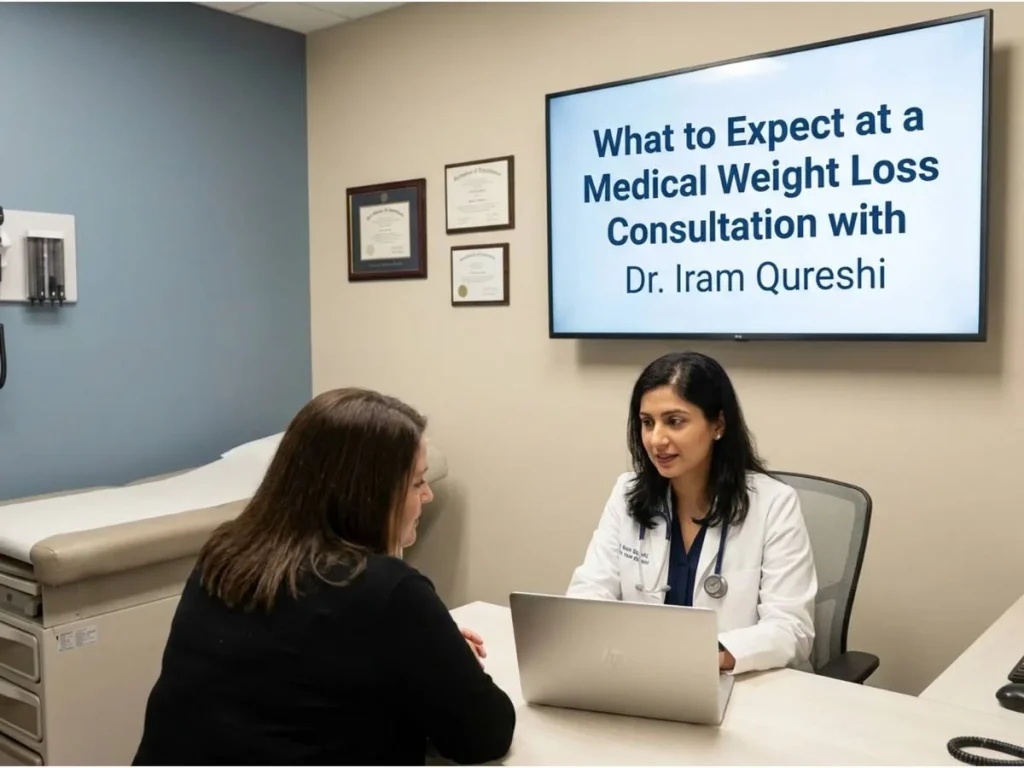
At Express Internal Medicine in Plano, TX, Dr. Iram Qureshi, DO conducts thorough, patient-centered medical weight loss consultations that are designed to give patients clear answers and a realistic starting point. Dr. Qureshi combines clinical precision with a warm, non-judgmental approach — creating an environment where patients can be honest about their history and confident that what they receive is medically grounded and personally relevant.
Before Your Appointment
When you book a weight loss consultation at Express Internal Medicine, you’ll be asked to complete intake paperwork covering your medical history, current medications, previous weight loss attempts, family history, sleep patterns, and activity level. This information helps Dr. Qureshi prepare for your appointment and makes the visit itself more focused and productive. If you have recent lab work from another provider, bringing those results allows Dr. Qureshi to review them in context before ordering anything additional.
It’s also helpful to come prepared with a general sense of what you’ve tried before and what your goals are — not just a target weight, but what you hope to be able to do physically, how you want to feel, and what has stood in the way. Dr. Qureshi takes a holistic view of success that goes beyond the scale, particularly for patients managing obesity-related conditions like joint pain, fatigue, or blood sugar concerns.
What Happens During the Consultation
The consultation begins with a detailed conversation. Dr. Qureshi reviews your medical history carefully — not just the diet history, but all of it. Cardiovascular history, thyroid disorders, hormonal changes, sleep quality, mental health, and any medications you take that may affect weight. Many patients are surprised to learn that medications they take for blood pressure, mood, or sleep can contribute to weight gain — and that adjusting them as part of a comprehensive plan is an option.
After the history review, Dr. Qureshi conducts a physical examination that includes measurement of blood pressure, heart rate, height, weight, waist circumference, and BMI. These measurements help establish a clinical baseline and identify cardiovascular or metabolic red flags. A targeted lab panel is typically ordered at or before this visit, covering fasting glucose, fasting insulin, A1C, lipid panel, thyroid function, liver enzymes, and complete metabolic panel.
Laboratory Tests Dr. Qureshi Typically Orders
- Fasting glucose and insulin: These two values together allow calculation of the HOMA-IR score, which quantifies insulin resistance — one of the most common and undertreated contributors to obesity-related weight gain and the primary reason many patients can’t lose weight despite reduced caloric intake.
- A1C (glycated hemoglobin): This test reflects average blood sugar over the previous two to three months. It identifies prediabetes and type 2 diabetes that may have been developing silently and helps guide decisions about whether metabolic medications are appropriate.
- Thyroid function (TSH, free T4): Hypothyroidism is a common and treatable cause of weight gain and difficulty losing weight. Because symptoms overlap significantly with obesity itself — fatigue, cold intolerance, sluggish metabolism — it’s frequently missed unless tested for directly.
- Lipid panel (cholesterol): Elevated LDL cholesterol, low HDL, and high triglycerides are all common in obesity and significantly increase cardiovascular risk. These values inform not just the metabolic picture but also treatment priorities.
What Comes Next: Your Personalized Treatment Plan
Once Dr. Qureshi has reviewed your medical history, completed a physical assessment, and analyzed your lab results, she develops a treatment plan tailored to your specific needs. For most patients, this is a comprehensive approach that addresses nutrition, physical activity, and any underlying medical factors contributing to weight gain or difficulty losing weight.
If GLP-1 medications such as Ozempic or Mounjaro may be an appropriate option for you, Dr. Qureshi will explain how they work, what results you can realistically expect, and whether they align with your health profile, lab findings, and treatment goals. If insulin resistance, thyroid dysfunction, or other metabolic concerns are identified, those conditions are addressed as part of your overall care plan rather than treated as separate issues elsewhere.
Follow-up appointments are scheduled at regular intervals — typically every four to six weeks during the active treatment phase — to review progress, check labs, adjust medications, and address any challenges. Because Dr. Qureshi also manages related conditions including diabetes management and high blood pressure in Plano, patients with multiple concurrent conditions benefit from continuity of care within a single practice.
Conclusion
A medical weight loss consultation with Dr. Iram Qureshi at Express Internal Medicine is not a judgment — it’s a starting point. You leave with a clear understanding of what’s been working against you medically, a plan built around your specific biology, and a physician who is committed to seeing it through with you. If you’ve been putting this off, the best next step is simply to make the appointment. Same-day consultations are often available in Plano — and the sooner you start, the sooner real change becomes possible.
Frequently Asked Questions
1. How long does the first consultation take?
Initial consultations at Express Internal Medicine are typically 45–60 minutes to allow time for a thorough medical history review, physical examination, and treatment planning discussion.
2. Will I leave my first appointment with a treatment plan?
In most cases, yes. Dr. Qureshi discusses initial treatment recommendations during the first visit. Final plan details may be refined once lab results are reviewed, typically within a few days.
3. Do I need a referral to book a weight loss consultation?
No referral is required. New patients can book directly through the Express Internal Medicine website or by calling the office. Same-day appointments are frequently available.
4. Will I be judged for my weight during the consultation?
Dr. Qureshi provides a non-judgmental, medically focused environment. Patients are evaluated as individuals with a medical condition that deserves appropriate care — not personal criticism.
5. What should I bring to my first weight loss appointment?
Bring a list of current medications, any recent lab results you have, your insurance card, and a summary of previous weight loss attempts. Being as specific as possible helps Dr. Qureshi build the most relevant plan.
6. Is GLP-1 medication always part of the weight loss plan?
No. GLP-1 medications are prescribed for patients who meet clinical eligibility criteria. Not every patient requires or is appropriate for medication — the plan is always individualized based on lab results and medical history.
7. Will blood tests be done at my first visit?
Lab orders are typically placed at the first visit. Depending on your insurance and preferred lab, blood draws can occur at the office or at a nearby facility, with results available within a few days.
8. How often will I see Dr. Qureshi after the first consultation?
Follow-up visits are typically scheduled every four to six weeks during active treatment, then spaced further apart as goals are met and results stabilize.
9. What if I also have diabetes or high blood pressure?
Dr. Qureshi manages these conditions concurrently within the same practice, which means your weight loss plan and your chronic disease management are integrated rather than separated across multiple providers.
10. What makes a medical weight loss consultation different from a commercial program?
A medical consultation identifies and treats the underlying biological reasons for weight gain — including hormonal imbalances, metabolic dysfunction, and medication effects — rather than providing a generic calorie-restriction program.
Disclaimer
This content is for educational purposes only and does not constitute medical advice. Individual consultations may vary based on each patient’s medical history, lab results, and clinical needs. Please consult Dr. Iram Qureshi or a qualified physician for personalized medical guidance.

Dr. Iram Qureshi is a dedicated board-certified Internal Medicine physician with a strong passion for preventative care and weight-loss management. With over five years of experience as a hospitalist, Dr. Qureshi has honed her expertise in treating acute medical conditions and focusing on preventing hospitalizations. She is committed to providing compassionate care and evidence-based guidance to help patients lead healthier lifestyles.
As the co-founder of Express Internal Medicine, Dr. Qureshi works alongside her husband, Dr. Adeel Khan, to create a welcoming and supportive environment for patients. She specializes in weight-loss management, offering personalized treatment plans aimed at achieving sustainable health outcomes. Dr. Qureshi holds degrees from Ohio State University and The University of Pikeville-Kentucky College of Osteopathic Medicine, with internal medicine training from Midwestern University OPTI in Sierra Vista, Arizona.
Fluent in English and Urdu/Hindi, Dr. Qureshi is passionate about educating her patients and empowering them to take charge of their health. Outside of her medical practice, she enjoys cooking, traveling, photography, and movies.