Managing type 2 diabetes day to day can feel like trying to control something that refuses to cooperate. Blood sugar readings shift with stress, sleep, meals, illness, and activity — and the consequences of sustained high blood sugar accumulate quietly in the background. Nerve damage. Kidney strain. Cardiovascular risk. Eye complications. None of it is visible on any given morning, which makes the whole thing feel abstract until it isn’t. For patients living with diabetes, the challenge isn’t usually motivation — it’s knowing what to monitor, how often, and what the numbers actually mean for their long-term health. Without consistent medical guidance, it’s easy to feel like you’re managing in the dark.
Many diabetic patients see their doctor only when something feels wrong — when symptoms flare, when blood sugar has been uncontrollable for weeks, or when a complication forces the issue. But by then, opportunities for early intervention have passed. The truth is that diabetes management is fundamentally a monitoring-based discipline. How often you see your physician, which labs get checked and when, and how quickly your treatment is adjusted in response to those results can be the difference between stable disease and accelerating complications. Most patients don’t know what that monitoring schedule actually looks like — because no one has ever sat down and explained it.
At Express Internal Medicine in Plano, TX, Dr. Iram Qureshi, DO provides structured, proactive diabetes management that includes a clearly defined monitoring and follow-up schedule for every patient. Rather than reactive care — where visits happen only when problems arise — Dr. Qureshi’s approach is built around regular touchpoints that allow blood sugar trends to be tracked, medications to be fine-tuned, and complications to be detected before they become serious.
Why Visit Frequency Matters in Diabetes Management
Diabetes is not a static condition. Blood sugar levels and medication requirements change over time based on weight, activity level, diet, other health changes, and the natural progression of the disease. A treatment plan that was working perfectly six months ago may be underperforming now — and without regular physician contact, that drift goes unnoticed until blood sugar has been elevated long enough to cause damage.
Beyond medication management, regular visits allow Dr. Qureshi to order the laboratory tests that reveal how diabetes is affecting kidney function, cardiovascular health, and overall metabolic status. Patients who visit consistently are also more likely to catch early warning signs of complications — such as microalbuminuria (early kidney involvement) or elevated LDL cholesterol — at a stage when they are still reversible. This is why consistent diabetes monitoring in Plano is a cornerstone of Dr. Qureshi’s care model, not an optional add-on.
Recommended Visit Frequency for Diabetic Patients
The appropriate frequency of physician visits for a diabetic patient depends on how well blood sugar is controlled and how stable the overall health picture is. Here is a general framework based on standard clinical guidelines:
Well-Controlled Diabetes (A1C Below 7%)
Patients whose blood sugar is consistently well-managed, whose A1C remains below 7%, and who have no significant complications typically need physician follow-up every three to six months. At these visits, Dr. Qureshi reviews blood sugar logs, repeats the A1C test, checks blood pressure, and evaluates any medication adjustments. An annual comprehensive review includes kidney function tests, lipid panel, dilated eye exam referral, and foot examination.
Uncontrolled or Newly Diagnosed Diabetes
Patients with newly diagnosed diabetes, those with A1C above 8%, or those whose blood sugar is not responding to current treatment need more frequent follow-up — typically every four to eight weeks until control is achieved. More frequent visits allow Dr. Qureshi to titrate medications more precisely, respond to patterns in blood sugar logs, and make dietary or activity adjustments more quickly than a quarterly schedule would allow.
Diabetic Patients with Complications or Other Conditions
Patients who have developed diabetic complications — nephropathy, neuropathy, retinopathy — or who carry comorbid conditions like hypertension or obesity may need monthly visits or more frequent touchpoints between appointments. The presence of cardiovascular disease elevates the stakes of blood sugar control and requires more vigilant monitoring of multiple markers simultaneously.
Key Tests Ordered at Diabetes Monitoring Visits
- A1C (every 3–6 months): The A1C reflects average blood sugar over the prior two to three months and is the single most important measure of long-term diabetes control. An A1C below 7% is the standard target for most patients, though individual targets may vary based on age, comorbidities, and patient preference.
- Kidney function (annually or more often): Urine albumin-to-creatinine ratio and serum creatinine/eGFR are used to detect early diabetic kidney disease. Catching microalbuminuria early allows Dr. Qureshi to make medication adjustments that can slow or halt progression significantly.
- Lipid panel (annually): People with diabetes are at significantly elevated cardiovascular risk. LDL cholesterol, HDL, and triglycerides should be checked regularly, and statin therapy considered when LDL remains elevated despite lifestyle changes.
- Blood pressure (every visit): Hypertension and diabetes together dramatically increase the risk of stroke, heart attack, and kidney failure. Dr. Qureshi monitors blood pressure at every visit and adjusts antihypertensive treatment proactively to keep readings within a safe range.
What You Can Do Between Visits
Consistent physician monitoring works best when paired with patient-level self-monitoring between appointments. Dr. Qureshi recommends that most diabetic patients check fasting blood glucose at home regularly — the frequency depends on whether patients are on insulin or other glucose-lowering medications. Tracking patterns in blood sugar, diet, and activity provides valuable data that makes every visit more productive. Patients are encouraged to bring their glucose logs to each appointment and to contact the office between visits if blood sugar readings are consistently above or below their target range.
Scheduling your annual physical exam in Plano through Express Internal Medicine is also an efficient way to consolidate your diabetes-related labs with your broader preventive health evaluation — reducing the number of separate appointments needed while ensuring nothing falls through the cracks.
Conclusion
Diabetes management is not a set-it-and-forget-it situation. The patients who maintain the best long-term control are those who partner consistently with a physician who knows their history, tracks their trends, and adjusts their care proactively. At Express Internal Medicine, Dr. Iram Qureshi provides exactly that kind of ongoing, structured diabetes care in Plano, TX. If you haven’t had a diabetes monitoring visit recently — or if your blood sugar control hasn’t been where it should be — schedule an appointment today. Consistent care is the most effective tool available.
Frequently Asked Questions
1. How often should I see my doctor if I have type 2 diabetes?
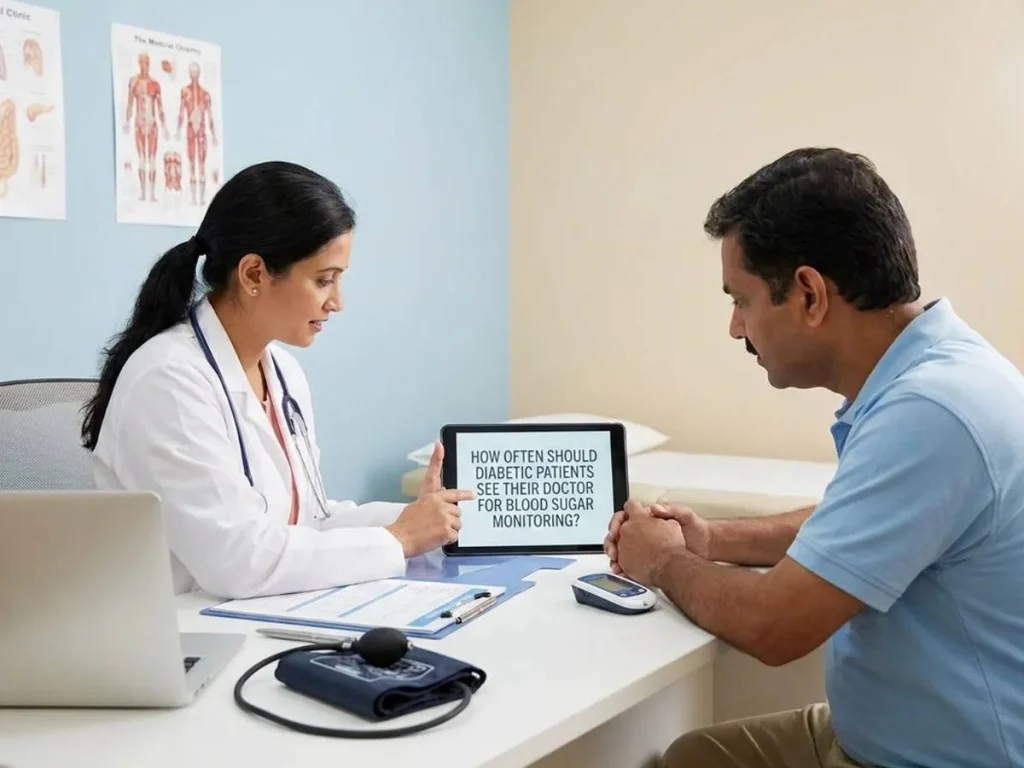
Most diabetic patients should see their physician every 3–6 months for stable, well-controlled diabetes, and every 4–8 weeks when blood sugar is uncontrolled or when treatment is being adjusted.
2. What is A1C and why is it checked every few months?
A1C measures average blood sugar over the past two to three months. It is the gold standard for evaluating long-term diabetes control and should be tested at least twice yearly for well-controlled patients, and quarterly for those with unstable control.
3. Can I manage type 2 diabetes without seeing a doctor regularly?
Self-monitoring is important, but it cannot replace physician-guided lab testing, medication management, and complication screening. Regular physician visits are essential for safe long-term diabetes management.
4. What tests are done at a diabetes monitoring visit?
Standard tests include A1C, fasting glucose, kidney function (urine and blood), lipid panel, and blood pressure assessment. Annual visits also include a comprehensive metabolic panel and complication screening.
5. When should I go to urgent care or the ER for my blood sugar?
Seek emergency care if blood glucose is consistently above 400 mg/dL, if you experience confusion, severe vomiting, or ketone presence in urine (signs of diabetic ketoacidosis). Call your physician for readings persistently above 250 mg/dL.
6. Does controlling blood sugar prevent diabetes complications?
Yes. Sustained blood sugar control within the target range significantly reduces the risk of nerve damage, kidney disease, eye complications, and cardiovascular events over time.
7. How often should I check blood sugar at home?
Frequency depends on your medications and level of control. Patients on insulin typically check multiple times daily. Those on oral medications may check fasting blood glucose once daily or several times per week, as directed by Dr. Qureshi.
8. Is Express Internal Medicine accepting new diabetic patients?
Yes. Dr. Iram Qureshi at Express Internal Medicine in Plano is accepting new patients with diabetes and can typically offer same-day or next-day appointments.
9. What should I bring to a diabetes monitoring visit?
Bring your home glucose log or meter, a list of current medications, your insurance card, and any relevant records from other providers you’ve seen recently.
10. Can I see Dr. Qureshi for both diabetes and weight management?
Yes. Dr. Qureshi manages both conditions simultaneously within the same practice, which produces better integrated outcomes than managing them separately with different providers.
Disclaimer
This blog is for educational purposes only and does not constitute individualized medical advice. Monitoring schedules and treatment decisions should always be made in consultation with a qualified physician based on individual patient circumstances. Please consult Dr. Iram Qureshi or a licensed healthcare provider for personalized diabetes care guidance.

Dr. Iram Qureshi is a dedicated board-certified Internal Medicine physician with a strong passion for preventative care and weight-loss management. With over five years of experience as a hospitalist, Dr. Qureshi has honed her expertise in treating acute medical conditions and focusing on preventing hospitalizations. She is committed to providing compassionate care and evidence-based guidance to help patients lead healthier lifestyles.
As the co-founder of Express Internal Medicine, Dr. Qureshi works alongside her husband, Dr. Adeel Khan, to create a welcoming and supportive environment for patients. She specializes in weight-loss management, offering personalized treatment plans aimed at achieving sustainable health outcomes. Dr. Qureshi holds degrees from Ohio State University and The University of Pikeville-Kentucky College of Osteopathic Medicine, with internal medicine training from Midwestern University OPTI in Sierra Vista, Arizona.
Fluent in English and Urdu/Hindi, Dr. Qureshi is passionate about educating her patients and empowering them to take charge of their health. Outside of her medical practice, she enjoys cooking, traveling, photography, and movies.