Living with obesity is not just about the number on the scale — it reshapes every part of daily life. Getting up from a chair becomes an effort. Climbing a single flight of stairs can leave you breathless. Sleep is restless, joints ache, and the simplest physical tasks feel like obstacles. Many patients describe a creeping loss of independence, the slow withdrawal from activities they once loved because the body no longer cooperates the way it used to. The emotional weight is just as heavy: embarrassment at the doctor’s office, anxiety about fitting into seats in public, frustration when every effort to lose weight seems to lead nowhere. If any of this sounds familiar, you are not alone — and you deserve care that treats obesity as the complex medical condition it is, not a personal failure.
Most people who struggle with obesity have already tried the standard advice. They have cut calories, downloaded fitness apps, tried every diet from low-carb to low-fat, and pushed through gym routines they could barely sustain. Some lose weight only to regain it within months. Others find that no matter how hard they try, the scale barely moves. What many patients don’t realize is that this is not a willpower problem — it is a biology problem. Obesity disrupts hormones that regulate hunger, metabolism, and fat storage. Without addressing those underlying biological mechanisms, lifestyle changes alone often fall short. That is why an increasing number of patients are seeking medical intervention, specifically physician-guided GLP-1 therapy, to break the cycle.
At Express Internal Medicine in Plano, TX, Dr. Iram Qureshi, DO, takes a physician-led approach to obesity treatment that goes far beyond generic advice. Dr. Qureshi conducts a thorough medical evaluation to identify hormonal imbalances, metabolic dysfunction, and contributing conditions before recommending any treatment. For eligible patients, GLP-1 receptor agonist medications like Ozempic and Mounjaro have become an important part of a personalized treatment plan — one that is monitored closely and adjusted over time to produce real, sustainable results. Patients choose Express Internal Medicine because they want a doctor who understands the science, explains it clearly, and stays involved throughout the process.
What Are GLP-1 Medications and Why Do They Work for Obesity?
GLP-1 stands for glucagon-like peptide-1, a hormone your body naturally produces in the gut after eating. Its job is to signal to your brain that you are full, slow the movement of food through your stomach, and help regulate insulin release. In people with obesity, this signaling system is often impaired — the brain doesn’t receive adequate fullness signals, hunger persists even after meals, and cravings remain strong throughout the day. GLP-1 receptor agonist medications work by mimicking this hormone at a much more consistent and potent level than the body can produce on its own.
Medications like semaglutide (sold under brand names Ozempic and Wegovy) and tirzepatide (Mounjaro and Zepbound) are currently among the most clinically effective options available for obesity treatment in Plano. Clinical trials have shown that patients using these medications — alongside dietary guidance and lifestyle support — can achieve significantly greater weight loss than with lifestyle changes alone.
How These Medications Work in the Body
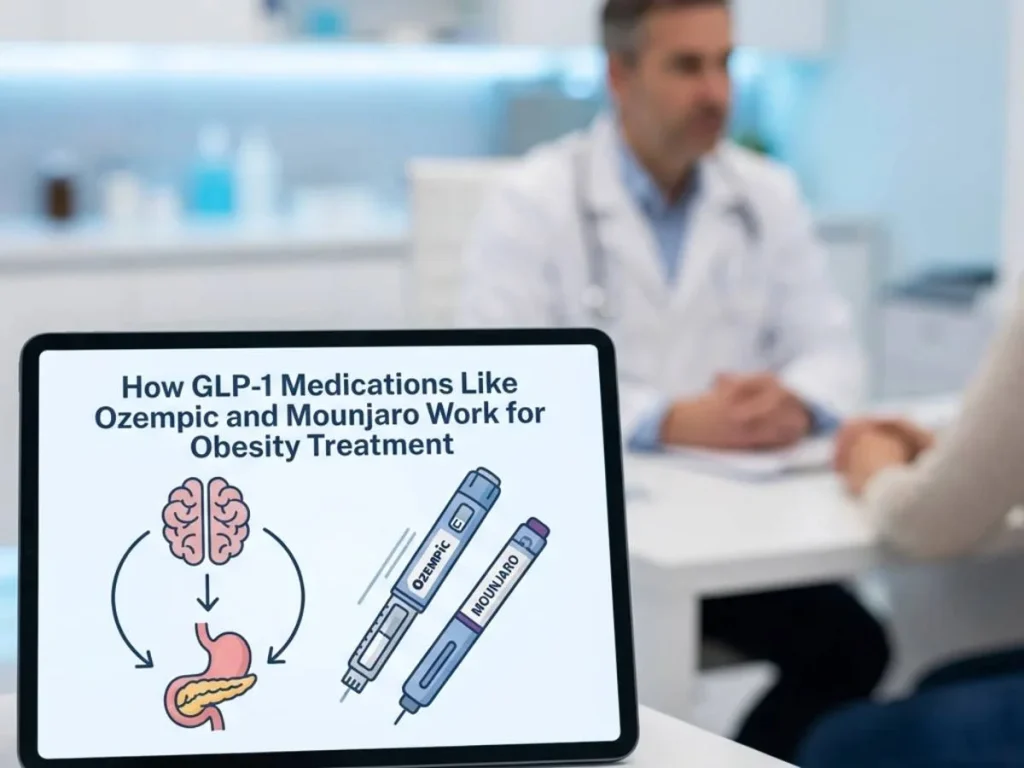
GLP-1 medications are administered as a once-weekly subcutaneous injection. After the first dose, the medication begins working on several fronts simultaneously. First, it acts on receptors in the hypothalamus — the brain’s appetite control center — to reduce hunger signals. Patients commonly report that they simply feel less driven to eat, and that feelings of fullness arrive sooner during meals.
Second, these medications slow gastric emptying — the rate at which food leaves the stomach. This extends the sensation of fullness after eating, meaning patients naturally consume smaller portions without fighting intense hunger. Third, in patients with insulin resistance or elevated blood sugar, GLP-1 medications help stimulate insulin release in response to meals while suppressing glucagon — a hormone that raises blood sugar. This makes them particularly valuable for patients who carry both obesity and metabolic dysfunction.
Ozempic vs. Mounjaro: What’s the Difference?
Ozempic (semaglutide) is a GLP-1 receptor agonist approved for type 2 diabetes management and, in its Wegovy formulation, for chronic weight management. It targets a single receptor pathway. Mounjaro (tirzepatide) is a dual-action medication that targets both GLP-1 and GIP (glucose-dependent insulinotropic polypeptide) receptors simultaneously. Clinical data suggests this dual mechanism produces somewhat greater average weight loss compared to single-agent GLP-1 medications, though individual responses vary based on metabolic profile, starting weight, and other factors.
Dr. Qureshi evaluates each patient individually to determine which medication — if any — is the right fit. Not every patient may benefit from GLP-1 therapy, and some patients achieve better results by addressing insulin resistance or other metabolic factors first. This is why a proper medical evaluation matters before starting any weight loss medication.
What to Expect During GLP-1 Treatment
When Dr. Qureshi initiates GLP-1 therapy as part of a medical weight loss program in Plano, treatment typically begins at a low dose to minimize side effects. The dose is gradually increased — a process called titration — over several weeks until the therapeutic dose is reached. This approach helps reduce the most common side effects, which include nausea, mild digestive discomfort, and temporary changes in appetite. Most patients tolerate the medication well once they reach their maintenance dose.
Key Benefits Patients Experience
- Reduced hunger and fewer cravings: Patients consistently report that the medication quiets the persistent hunger that made previous diets so difficult to sustain. This makes it easier to follow dietary guidance without feeling deprived or constantly fighting urges to eat.
- Meaningful, sustained weight loss: Unlike crash diets that produce rapid but temporary results, GLP-1 therapy supports gradual and clinically significant weight loss. Many patients lose 10–20% of their body weight over 12 months when medication is combined with lifestyle guidance.
- Improved metabolic markers: Beyond weight, patients often see improvements in fasting blood sugar, A1C levels, blood pressure, and cholesterol — all conditions that are worsened by obesity and improved through sustained weight reduction.
- Reduced joint strain and improved mobility: Even modest weight loss of 5–10% of body weight significantly reduces the mechanical load on knees, hips, and ankles — translating to less pain, better movement, and a return to activities patients had stopped enjoying.
Who Is Eligible for GLP-1 Medications?
GLP-1 therapy is generally considered for patients with a BMI of 30 or higher (obesity), or a BMI of 27 or higher when weight-related conditions such as type 2 diabetes, hypertension, or sleep apnea are present. However, eligibility depends on a comprehensive medical evaluation. Patients with certain thyroid conditions, a history of pancreatitis, or other contraindications may not be suitable for GLP-1 medications. Dr. Qureshi carefully evaluates each patient to determine whether this treatment is a safe and appropriate option before any prescription is considered.
Conclusion
GLP-1 medications like Ozempic and Mounjaro represent a real shift in how medicine approaches obesity — not as a character flaw to overcome, but as a biological condition that responds to targeted treatment. At Express Internal Medicine in Plano, Dr. Iram Qureshi provides personalized, physician-supervised GLP-1 programs that combine medication with monitoring, dietary guidance, and ongoing support. If you’ve been struggling with weight loss despite your best efforts, a medical evaluation could reveal the underlying factors working against you — and the right treatment to address them.
Ready to find out if GLP-1 therapy is right for you? Book a consultation with Dr. Qureshi today.
Frequently Asked Questions
1. What does GLP-1 stand for?
GLP-1 stands for glucagon-like peptide-1, a hormone produced in the gut that regulates appetite, insulin release, and blood sugar after meals.
2. How quickly do GLP-1 medications start working?
Most patients notice a reduction in appetite within the first few weeks, though meaningful weight loss typically becomes evident after 8–12 weeks of consistent treatment.
3. Are Ozempic and Mounjaro the same medication?
No. Ozempic contains semaglutide and targets the GLP-1 receptor only. Mounjaro contains tirzepatide and targets both GLP-1 and GIP receptors, which may produce greater weight loss in some patients.
4. Do I need a specialist to get GLP-1 medications?
No. Board-certified internal medicine physicians like Dr. Iram Qureshi at Express Internal Medicine in Plano can prescribe and manage GLP-1 therapy directly, without a referral to an endocrinologist or obesity specialist.
5. What are the most common side effects?
Nausea, mild stomach discomfort, and reduced appetite are the most common side effects, particularly during dose escalation. Most patients find these manageable and they typically improve over time.
6. Will I regain weight when I stop the medication?
Some weight regain is possible if medication is discontinued without sustained lifestyle changes in place. Dr. Qureshi works with patients on long-term strategies to maintain results during and after treatment.
7. Can GLP-1 medications help with type 2 diabetes as well?
Yes. Semaglutide (Ozempic) is FDA-approved for type 2 diabetes management and also produces significant weight loss. Tirzepatide (Mounjaro) carries both approvals as well.
8. How long do I stay on a GLP-1 medication?
Treatment duration varies by patient. Some patients benefit from long-term use, while others transition off medication once they reach their goals and have stable lifestyle habits. This is a decision made in partnership with Dr. Qureshi.
9. Is GLP-1 therapy covered by insurance?
Coverage varies widely by insurance plan and diagnosis. Dr. Qureshi’s team can assist with prior authorization and documentation to support coverage requests.
10. How is Express Internal Medicine different from a weight loss clinic?
Dr. Qureshi is a board-certified internal medicine physician who evaluates and treats obesity as a medical condition — including related issues like insulin resistance, metabolic syndrome, and cardiovascular risk — rather than focusing on weight loss alone.
Disclaimer
This blog post is for educational purposes only and does not constitute medical advice. It is not a substitute for professional evaluation, diagnosis, or treatment by a qualified healthcare provider. Treatment approaches vary based on individual medical history and circumstances. Please consult Dr. Iram Qureshi or another licensed physician before starting any new medication or weight management program.

Dr. Iram Qureshi is a dedicated board-certified Internal Medicine physician with a strong passion for preventative care and weight-loss management. With over five years of experience as a hospitalist, Dr. Qureshi has honed her expertise in treating acute medical conditions and focusing on preventing hospitalizations. She is committed to providing compassionate care and evidence-based guidance to help patients lead healthier lifestyles.
As the co-founder of Express Internal Medicine, Dr. Qureshi works alongside her husband, Dr. Adeel Khan, to create a welcoming and supportive environment for patients. She specializes in weight-loss management, offering personalized treatment plans aimed at achieving sustainable health outcomes. Dr. Qureshi holds degrees from Ohio State University and The University of Pikeville-Kentucky College of Osteopathic Medicine, with internal medicine training from Midwestern University OPTI in Sierra Vista, Arizona.
Fluent in English and Urdu/Hindi, Dr. Qureshi is passionate about educating her patients and empowering them to take charge of their health. Outside of her medical practice, she enjoys cooking, traveling, photography, and movies.